
Rickmansworth Aquadrome
In this section
Your visit
Rickmansworth Aquadrome is a beautiful open space, free for all to enjoy.
As a Local nature reserve, it boasts two large lakes - Batchworth and Bury Lake. These are surrounded by woodland and open grassland, giving stunning views across the water. The paths surrounding the lakes are fully accessible, so all our visitors have an opportunity to connect with nature whilst being on the doorstep of Rickmansworth town.
The site has many habitats, including rare wet woodlands. Whilst these areas can look a little untidy, they are an uncommon and valuable habitat. The Aquadrome is of particular importance for water birds and a popular place to spot different wildfowl including mallards and great crested grebes.
The Aquadrome also offers homes to many water-based clubs as well as an excellent cafe and two play areas designed to allow young people to play on an exciting variety of equipment.
This is an excellent starting point to connect to the Colne Valley Park and onto the Grand Union Canal at Batchworth Lock. You can access the Ebury Way from the canal which is for cyclists and walkers.
All of this combines to make for a memorable visit to the Aquadrome and beyond. It is unique in what it has to offer, protect and enhance. Please come and enjoy.
The Rickmansworth Aquadrome Project
For the latest updates on the Rickmansworth Aquadrome project, including the Ebury Play Area and Woodland Path, please visit our dedicated project page: https://www.threerivers.gov.uk/services/leisure-parks-culture/rickmansworth-aquadrome-project
Address
Frogmoor Lane (off Harefield Road), Rickmansworth, WD3 1NB
Car park opening times
1 April - 30 September - 8am to 9.30pm
1 October - 31 March- 8am to 6pm
Please note; the car park will be locked after these times.
The site is also easily reached by public transport as Rickmansworth Station (Chiltern and Metropolitan lines) are just a five minute walk away.
Toilet opening times
The Aquadrome toilets close 30 minutes before the car park closes. Please note; the toilets will be closed on Christmas Day, Boxing day and New Years Day
Discover
- Two lakes to walk around and explore
- Café in the Park
- Free car parking (see above opening times)
- Accessible pathways
- Toilets (toilets close 30 minutes before the car park closes)
- Dog free picnic area with additional play equipment
- Access to the Grand Union Canal footpath
- Water based sports clubs N.B. Activities that take place on the lakes within the Aquadrome are part of the associated clubs. Please contact them directly if you would like to participate in their activities. Three Rivers District Council prohibits the use of personal equipment on the lakes. Paddle boarding and wind surfing activities are strictly forbidden independently.
BBQ's are strictly prohibited at The Aquadrome.
Current works and notifications
Asbestos mitigation
Asbestos remediation works at the Aquadrome are due to start on the 12 October. Find out more and keep up to date.
Blue-green algae alert - important information for dog owners
Please keep pets out of Batchworth Lake. An increase in the naturally occurring, but highly toxic, blue-green algae has become apparent and water samples are currently being tested by experts.
The algae can cause vomiting and diarrhoea if swallowed or if it comes into contact with the skin. Ingestion may also cause liver failure in pets.
Blue Green Algae can be present on the lakes all year round but tends to increase during the summer months due to increased heat / sun light. The lakes are monitored via an on-water system and additional signage is put up, around the lakes, if the levels of algae increase.
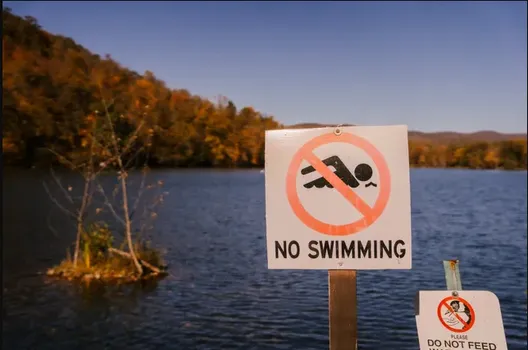
There are signs in the Aquadrome that advise no swimming for people or dogs, and these are in situ all year round.
Accessibility
Three Rivers District Council welcomes all visitors to Rickmansworth Aquadrome and offers good access throughout. We hope that the information below is useful in planning your visit. If we are missing any information that would have helped your visit, please contact us at leisure@threerivers.gov.uk and we will do our best to include it.
Accessibility at the Aquadrome
Accessible parking is available. Several spaces are designated for blue badge holders and are clearly marked on the ground with a hatched area. They are situated on the right hand side as you enter the car park.
The car park drive surface is compacted stone. In adverse weather conditions this car park could potentially become muddy and have large puddles. Lowered kerbs are available at entry points to facilitate ease of access.
Café
A variety of dietary requirements are catered for.
Allergen information is displayed.
There is a Quiet Space provided in the café for visitors who prefer a less noisy/busy environment.
Facilities
There is a disabled toilet onsite which can be accessed with a key. The contact number for the onsite groundskeeper is displayed onsite.
There is also a disabled toilet inside the café.
Footpaths and difficulty
In general footpaths are largely solid, level and wide enough to accommodate two directional movement by both ambulant visitors and wheelchair users.
Around both lakes there is seating provided around the route. Please be aware that some seating is situated on the grass.
Bury Lake Circular walk
There is level access provided to the Bury Lake Circular Walk from the Aquadrome car park. The pathway around the lake is largely solid, level and wide enough to accommodate two directional movement by both ambulant visitors and wheelchair users. Some signage and wayfinding information provided, along with a number of interpretation boards.
Batchworth Lake Circular walk
The pathway around the lake is largely solid, level and wide enough to accommodate two directional movement by both ambulant visitors and wheelchair users. There is some seating provided around the route. An accessible seating platform onto the lake is provided opposite the Water Ski Centre.
AllTrails link for Batchworth Lake
Fishing Swim
There is a wheelchair accessible fishing swim located on Batchworth Lake. You will need to contact the Uxbridge Rovers to enquire about membership and a day pass to use the swims/platforms.
Mobile phone coverage
Mobile phone coverage within Rickmansworth Aquadrome is generally good across all networks. But we would ask you to check this on your own devices on arrival.
Clubs at the Aquadrome
The Aquadrome offers a huge variety of water-based clubs from sailing to fishing.Activities that take place on the lakes within the Aquadrome are part of the associated clubs. Please contact them directly if you would like to participate in their activities.
Three Rivers District Council prohibits the use of personal equipment on the lakes.
N.B Paddle boarding and wind surfing activities are strictly forbidden independently.
Bury Lake Young Mariners (BLYM)
The Club promotes the development of life skills in young people through sailing and related activities. It is an award-winning local youth charity, run entirely by volunteers. They operate an all-inclusive club and welcome new members.
BLYM boasts a diverse fleet of modern sailing dinghies including RS200s, Lasers, Picos, Toppers, Wayfarers, Coypus and Funboats. They have 9 powerboats specifically for use as rescue and coaching craft.
Find out moreColne Valley Special Sailors (CVSS)
CVSS is a local charity providing sailing for people of all ages with various disabilities in Bury Lake, Rickmansworth. Staffed entirely by volunteers who enjoy the social experience, the friendship, the pleasure of sailing but most importantly - the rewards of helping others. They share facilities with the Rickmansworth-based Bury Lake Young Mariners (BLYM).
CVSS are part of 'Sailability' the RYA’s national programme enabling people with disabilities to try sailing and take part regularly. RYA is the governing body for sailing in the UK.
Find out moreNomad Kayak Club
Based at Bury Lake Young Mariners (BLYM) site, this family oriented club caters for anyone who can safely participate in the sport.
The Club offers its members a wide range of kayaking and canoeing opportunities, ranging from complete beginners to elite sport paddlers.
Find out moreUxbridge Rovers Angling And Conservation Society
Uxbridge Rovers is one of the oldest angling societies in the UK. Based in the historical Colne Valley, Uxbridge Rovers boasts an impressive portfolio of venues including several miles of the river Colne, Thames, and Cherwell, gravel pits, and five miles of the grand union canal.
It is a friendly and inclusive club that welcomes all and has official representatives for junior and disabled anglers. They have conservation at our heart and are partnered with multiple organisations to improve wildlife habitats as well as fishing.
Find out moreRickmansworth Water Ski Club
A family orientated club, operating in a friendly but competitive atmosphere with a wide spectrum of membership, from juniors to veterans. The club is professionally run with qualified boat drivers and coaches and a strict adherence to safety standards.
Visitors are welcome and can participate on a 'pay as you play' basis.
Please enquire about membership.
Three Rivers Radio Yachting Club
A friendly club that wants to encourage members to build and race radio-controlled model yachts. New members are welcome, and no experience is required. A boat can be lent to you whilst members show you how to sail it.
The Club races two recognised classes of yacht – the International One Metre and the Marblehead.
Find out moreRickmansworth Waterways Trust
Rickmansworth Waterways Trust a Heritage Education Charity bringing together people from across our community with a love for the canals around Rickmansworth.
Aquadrome Management Plan
View the Aquadrome Management Plan (PDF, 9 MB).
View the Management Plan appendices
Asbestos Management Plan (and FAQs)
View the Asbestos Management Plan (PDF, 1.6 MB).
Asbestos mitigation
Update 16 October 2026:
Works on site commenced on Monday 12 October.
Site set up including the erection of Heras fencing around the works site, the installation of the welfare unit and the decontamination unit has been completed.
Works have started to clear vegetation in preparation for the removal of the asbestos containing materials.
Required regulatory signage has been erected on the Heras fencing to advise the public on the nature of works and to keep out of the working zone.
Air quality monitoring has taken place and the first week’s reports have been received and filed as part of the requirements for the Asbestos Management Plan.
Update 9 October 2026:
Works on site are due to start on Monday 12 October.
A prestart meeting with the contractors has taken place with officers, and the works will commence with the site set up including the erection of Heras fencing around the works site, the installation of the welfare unit and the decontamination unit.
The contractors will then start to clear vegetation and prepare the site for the removal of the asbestos containing materials.
Site signage has been erected this week to show that the parking bays are out of use and to advise the public on the nature of works.
Contractors have had a site meeting with Grounds Maintenance in line with the Asbestos Management Plan (AMP) procedures for the site to be ready for the works and permit to works have been issued.
Officers will be attending the site at least weekly to review the works with the contractor, with daily supervision undertaken by the Grounds Maintenance Manager in line with the AMP.
A press release has been issued and a news story regarding the works.
Update 2 October 2026:
An update in advance of the Rickmansworth Aquadrome asbestos remediation works due to start on the 12 October. There will be signage put up next week at the site to inform the public of the asbestos works taking place in the Picnic Area and wet woodland and to inform the public of the parking bay closure in the Aquadrome car park during these works, which will be used for the compound area.
Update 25 September 2026:
Advanced notice that the below parking bay of the Aquadrome car park will be required as part of the works compound area for the contractors to conduct safe operations on site. Further updates will be provided as the works approach, commence and progress.
Frequently asked questions
These FAQs are live and as such are subject to change and amendment.
What is the Asbestos Management Plan?
The Aquadrome Asbestos Management Plan is a factual site management document prepared in line with the Control of Asbestos Regulations and is what specialist consultants have recommended that the council does with respect to the management of asbestos at the Aquadrome. This operational management plan guides how the council treats and manages the site to ensure it can remain safe and open for all to use. The council takes the health and safety of the public very seriously, and on the advice of the qualified and highly experienced specialist consultants, the decision was taken to implement the ‘no dig’ policy which includes banning the staking of the ground. The safety concern arises not simply from the presence of asbestos but whether it is disturbed or not, which is why the no dig policy was implemented. The site remains safe to use for general day-to-day activities.
Can I see the Asbestos Management Plan?
A copy of the current plan is available on the website but it should be noted that it is a live management plan and as such is subject to continual change and amendment.
Why is an Asbestos Management Plan needed?
The duty to manage asbestos is set out in regulation 4 of the ‘Control of Asbestos Regulations 2012’ and is a key part of the council’s requirements for HSE (Health and Safety Executive) compliance. As the council are aware of the existence of asbestos at the Aquadrome site it is required to have a plan to manage the site in accordance with the relevance legislation and regulations.
Why is there asbestos present at the Aquadrome at all?
The history of the source of the asbestos contamination is unknown; however, it is believed that there are potentially significant quantities of buried asbestos cement, textile, asbestos insulating board and other asbestos materials in the ground at the Aquadrome. For general day-to-day use, the Aquadrome poses no health risks to members of the public or other users.
What does this mean for public activities at the Aquadrome?
Events can still go ahead at the Aquadrome; however, they must abide by the requirements of the Asbestos Management Plan and must consider the implications of the management plan in their respective setups and management. The council worked very closely with our specialist consultants to develop a management plan that would enable all current activities, such as the festival and park run events to continue with realistic and proportionate mitigation measures in place.
With the management plan finalised the council is in the process of sharing it and discussing its requirements with relevant organisations. Three Rivers District Council will continue working with organisations to explore options to ensure their respective events can go ahead, but public safety must always be the council’s first concern.
Council officers have had and continue to have ongoing dialogue with main Aquadrome User Organisations to ensure that proper considerations have been made in relation to the Asbestos Management Plan requirements, including those related to the “no dig” designation, such as ground staking.
What does this mean for the Aquadrome in general and its day to day use by the public?
The Aquadrome remains a safe environment for general day-to-day use by the public and can still be used for leisure, such as dog walking, picnics, and water-based activities. Three Rivers District Council is committed to securing the health and safety of members of the public using the site for recreational purposes. The Aquadrome Asbestos Management Plan has been prepared with consideration to how the Aquadrome is used and enjoyed, and the actions required to manage the risk of asbestos on the site are proportional and sensible measures to keep people safe and allow them to enjoy the activities that they always have.
History and background
Why is there asbestos/who put it there?
The history of how asbestos arrived at the Aquadrome site is not formally recorded. The council understands that there were asbestos manufacturers located within the local area, but there are no records of when, who or how the asbestos was deposited on the site.
Surveys of the Aquadrome have revealed that there are a number of different types of asbestos and asbestos materials present on the site. This includes asbestos cement boards, insulation materials and textiles.
Is it safe?
Air monitoring surveys confirmed that the levels of asbestos present in the air are well below established safe levels. The Aquadrome site remains safe provided activities are undertaken in accordance with the Asbestos Management Plan, which is primarily aimed at avoiding the disturbance of the ground.
What risk assessments have been undertaken?
The Asbestos Management Plan is the result of a risk assessment of the regular activities undertaken on site. Any activities that require the disturbance of the ground, for example; installing a new waste bin, will be subject to a specific risk assessment and will include consideration on actions which will minimise ground disturbance.
Where it is not possible to undertake works without disturbing the ground, the appropriate asbestos surveys will need to be conducted, by specialist contractors before any works can commence. The council will be responsible for fully assessing any such works and the risks associated with the disturbance of asbestos materials.
The Asbestos Management Plan has been developed to minimise the impact upon users and the requirements that need to be met to satisfy the Control of Asbestos Regulations.
Will the council look to have the asbestos removed?
The costs and potential disruption to the natural infrastructure of the site, which is a Local Nature Reserve, are considered prohibitive. This is why the council has implemented the Asbestos Management Plan, to ‘manage’ rather than ‘remove’ the risk posed by asbestos.
Activities
Three Rivers District Council is committed to securing the health and safety of members of the public using the site for recreational purposes. The Aquadrome Asbestos Management Plan has been prepared with consideration to how the Aquadrome is used and enjoyed, and the actions required to manage the risk of asbestos on the site are proportional and sensible measures to keep people safe and allow them to enjoy the activities that they always have.
Rickmansworth Festival
The council made the organisers aware of the changes in May 2023, and met with them in December 2023 to discuss the detail of the plan and what implications that might have for the festival set up and management. Any decision relating to the festival taking place is, and remains, with the festival organisers and not the council.
Why is there a requirement to monitor before and after large events?
The Aquadrome site is subject to periodic picks of loose asbestos material that rises to the surface after bouts of heavy rain or intensive footfall. To ensure such material is recovered and disposed of correctly it has to be picked up and removed by licenced contractors. Such works come at a cost to the council and in inviting large numbers of people to the Aquadrome, it is necessary that the organisers are responsible for the costs associated with picking up loose asbestos material which would be above and beyond that required by day-to-day use of the site.
Is the Aquadrome safe for water-based activities and for general leisure use?
Sailing/water-skiing
The Aquadrome is and remains a safe environment for general day-to-day use by the public and can still be used for leisure, such as dog walking, picnics, and water-based activities.
Asbestos material is present within the lakes at the Aquadrome and whilst it remains under the water and ‘encapsulated’ there is no uncontrolled release of fibres into the atmosphere. The council closely manages the water levels within the lakes.
Fishing
Like sailing and water-skiing, fishing is another activity that is safe to participate in at the Aquadrome. The disturbance of the asbestos within the lakes is rare, but where lines are snagged, they should be cut and removed safely from the water whilst allowing the asbestos to remain submerged. Council officers liaise regularly with the Uxbridge Rovers Angling and Conservation Society who work closely with the council on many issues including those related to asbestos management.
Picnics, Pegs, Posts & Dogs
Picnics are perfectly permissible within the Aquadrome, however, any disturbance of the ground should be avoided and this could include, for example: driving windbreak posts or tent pegs into the ground; ground anchors for ‘dog loops’ or other such activities. Whilst the risks associated with such activities are considered low, the known existence of asbestos under the ground and the potential for any uncontrolled release of asbestos fibres related to the removal of such items should be avoided.
Dogs should be under control at all times, and on leads in certain areas as prescribed by the Public Space Protection Order 2022. Where dogs, or indeed any other animals, may expose the ground, the council’s grounds maintenance teams are trained to identify any visible asbestos materials and if necessary, the removal of exposed materials will be arranged, and the hole will be filled and levelled.
Parkrun
Parkrun organisers have confirmed that the requirement to not stake the ground is not an issue and will not impact the event as they can use alternative means for sectioning e.g. cones/weighting.
Cricket
Under the council’s Byelaws for Pleasure Grounds, Public walks and Open Spaces (2020), which includes the Rickmansworth Aquadrome, cricket is restricted to those areas designated for playing cricket and as such no areas are formally designated for cricket at the Aquadrome.
Building/Infrastructure works
Will the new bridge still get built?
Yes, new infrastructure projects remain possible at the Aquadrome but they must be constructed with appropriate mitigation in line with the requirements of the Asbestos Management Plan.
Signage
Signage is currently being reviewed as part of the recent adoption of the Aquadrome Management Plan (not to be confused with the Asbestos Management Plan), with support from Heritage Lottery Funding. New signage installed as part of this project will incorporate information about the history of the site and its impacts on modern day usage. Any new signage with be implemented with mitigation in line with the requirements of the Asbestos Management Plan.
Maintenance and the natural environment
What are we doing to manage the asbestos?
The site is proactively managed by the council’s grounds maintenance teams who are fully trained to deal with these matters. On occasions when the site floods such areas and pathways are closed to the public and not reopened until they have been cleared and returned to normal. The issue of pegs and stakes in the ground is not the putting of them in the ground but the potential for the uncontrolled release of asbestos fibres when they are pulled out and removed.
What happens if wildlife dig the ground?
Where animals may expose the ground, the council’s grounds maintenance teams are trained to identify any visible asbestos materials and if necessary, the removal of exposed materials will be arranged, and the hole will be filled and levelled.
Can new trees still be planted?
Yes, with mitigation in line with the requirements of the Asbestos Management Plan.
What happens when a tree blows down?
Where there is evidence of asbestos material in the root-ball, under controlled conditions, the trees are cut from the trunk and the root-ball is carefully lowered back into its original position.
General FAQs
We've looked at the questions that are often asked and have compiled some answers to the most commonly asked questions.
When will the new play area be open?
Ebury play area is now open for all to enjoy.
The much-anticipated refurbishment of the play area has been completed in time for the summer holidays.
Three Rivers District Council’s contractor, The School Renovation Company, has successfully completed the revamp of the Ebury Play Area by Riverside Drive on Monday 6 July.
Can I swim in the Aquadrome?
No.
Unfortunately, swimming is prohibited in both lakes at The Aquadrome. There is open water swimming provided privately in the local area. Further details can be found on the below links:
https://activeswimworld.co.uk/blog/venue/mtslake/ http://www.denhamwaterski.com/swim/swim.html
Visitors are reminded that open water can be deep, unpredictable and contain hidden dangers. Swimming in the Aquadrome, a nature reserve, is not permitted for a variety of reasons relating to safety and the environment. Please take notice of our ‘no swim’ signs for safety and for the protection of the habitats of the Aquadrome. Nature reserves are not managed with the safety of swimmers in mind so there is a risk of injury or illness.
Further reasons the council does not allow swimming at the Aquadrome include:
- Disturbance of Wildlife: Swimming disturbs the natural habitats of wildlife, forcing them to feed and rest elsewhere, which can lead to stress and health issues for the animals.
- Damage to Riverbanks and Tree Roots: Entering and leaving the water damages riverbanks and tree roots, which can destroy nesting sites for threatened species like water voles and fish.
- Environmental Impact: Swimming can disturb the natural environment, potentially causing damage to sensitive ecosystems and habitats.
Dogs
Are dogs allowed at the Aquadrome?
Yes.
However, dogs are not permitted in the water, in the play area, outdoor gym or the fenced picnic area. All dogs must be kept under control at all times and on a lead around the cafe area.
At bird nesting times, dog owners will be asked to keep their dog on a lead and/or under close control around certain areas of the lakes to ensure the protection of the waterfowl.
As of 1 April 2016, a Public Space Protection Order (PSPO) in relation to dog control came into effect across the Three Rivers district. Find out more.
Why don't you charge non-Three Rivers residents for parking?
There are currently no plans to charge for using the Aquadrome car park.
The “no-charge” policy is to remove any financial barriers to using the outdoor public space.
Events (Hire of grounds)
Can I hold an event in the Aquadrome?
Yes.
Unlike most of our other sites, due to the local nature reserve status and current visitor numbers, Rickmansworth Aquadrome has restricted criteria for hire. Find out more information.
Paddle boards and Fishing
Can I bring my own paddle board or fishing equipment to The Aquadrome?
No.
Three Rivers District Council prohibits the use of personal equipment on the lakes. Swimming, Paddle boarding and wind surfing activities are strictly forbidden independently.
Activities that take place on the lakes within the Aquadrome are part of the associated clubs. Please contact them directly if you would like to participate in their activities.
Find out more about our Aquadrome clubs.
BBQ's
Can I have a barbecue in The Aquadrome?
No.
Barbecues or any other form of fire are not permitted for the general public on land owned by Three Rivers District Council as per the byelaws.

Can I fly my /para motor/model aircraft/hang glider/power driven aircraft in the Aquadrome?
No.
Flying air craft of any kind, taking off and/or landing is not permitted on land owned by Three Rivers District Council as per the byelaws, unless in case of emergency.
Find out more about our byelaws.
Blue Green Algae
Blue Green Algae can be present on the lakes all year round but tends to increase during the summer months due to increased heat / sun light. The lakes are monitored via an on-water system and additional signage is put up, around the lakes, if the levels of algae increase.
There are signs in the Aquadrome that advise no swimming for people or dogs, and these are in situ all year round.
The Rickmansworth Aquadrome Project
Over the coming years, Three Rivers District Council, alongside its delivery partner, Hertfordshire County Council’s Countryside Management Service, and with support from external funders, will undertake significant work to restore, improve and safeguard the Rickmansworth Aquadrome for the future.
Find out more about The Rickmansworth Aquadrome Project.
Birdlife at Rickmansworth Aquadrome
This Local Nature Reserve hosts a range of bird species, from blackbirds to grey herons. Below are just some of the waterbirds you may spot when visiting Rickmansworth Aquadrome.
Mallard
The mallard is one of the most common ducks at the Aquadrome. The male has a dark green head, a yellow bill and a brown and grey body, whereas the female is speckled brown with an orange bill. Mallards are ‘dabbling’ ducks which means they feed on the surface or in shallow water. There are around 61,000 breeding pairs resident in the UK, with another 675,000 wintering birds, migrating from northern Europe.
Mute Swan
Their bill is orange with a black bulbous bump. A female is called a ‘pen,’ and the male is called a ‘cob’, there are not many differences between the two, except during breeding season the cobs black bump is larger. Their young are small and grey and are called cygnets. Despite their name, mute swans make loud honking noises and snorts and may hiss if you get too close. They are a long-standing native species, having been here since the medieval period.
Moorhen
Moorhens are black/brown in colour with a distinctive red and yellow beak. When looking closely, you can also see that their legs are green. Their bright beak is a display of how healthy they are, the brighter the beak, the healthier! The red is related to the level of bacterial infections and the yellow to the level of nutrients in their blood.
Coot
The coot is in the same family as moorhens but is distinctive by its white beak and white face shield. Its body is completely black and has skeletal-looking white webbed feet. It can often be seen diving under the water to gather vegetation to feed on. Their wings are round, making them weak fliers, instead, they run along the water, splashing to take off and land.
Tufted Duck
The tufted duck earns its name from the tuft of black feathers seen on the back of their heads. Their colouring is distinctive by having a black head, neck, chest and back and large white patches on their sides. Some of the UK’s tufted ducks stay here year-round, but their population increases in the winter due to migration from Iceland and Northern Europe.
Mandarin Duck
Mandarin ducks were introduced to the UK from China initially as pets, but following many escapes, they have established a population within various areas of the UK. The difference between the male and female is distinct, the brightly coloured male can be seen in the picture as a courting display to the more neutral coloured female.
Goldeneye
The goldeneye is a diving duck; the male is black and white with a black domed head that shimmers green. Females are mottled grey with a brown head, but both have the distinctive golden eye. It is an uncommon visitor and the male makes a loud whistle as part of their courtship display that can be heard up to one kilometer away.
Wigeon
A medium sized duck with a rounded head and small grey bill with a black tip. Males have a light brown head and neck, with a light-yellow forehead, pink breast, and grey mottled body. Females share the same beak but have a mottled brown body. They migrate down to the UK during the winter period from Iceland, Scandinavia, and Russia.
Great Crested Grebe
The great crested grebe is a distinctive resident in the lakes at the Aquadrome and can often be seen diving in the water to find food rather than flying. They have a decorative display of maroon and black feathers atop their head, with a white side profile and a deep red eye. Their body is brown/orange mottled, and their underneath is white. They were once hunted for their elaborate feathers, causing their UK population to decline rapidly. Now, their population is back on the rise and courting displays are extravagant and can be noticed by them rising out of the water and shaking heads with their partner.
Egyptian Goose
A non-native bird originally from Africa, with previous residencies along the River Nile. The Egyptian goose was introduced to the UK in the 17th century and has established populations in various areas. Its body is pale brown and grey, with white areas on their wings. Their eyes have distinctive deep brown circles around them.
Canada Goose
A species originating from North America, it can now be found across the UK. It was first introduced to join King James II’s waterfowl collection in St James’ Park in London in the 17thcentury. It is one of the UK’s largest geese, with a black head and neck, white underside of their head and a brown body. It can often be heard before it is seen, as they form large, noisy colonies.
Greylag Goose
The Greylag Goose is the largest goose native to the UK. They have a bright orange beak and legs, and a grey and light brown body, with a white underneath. They are very sociable and prefer to live in large flocks, when they communicate it is by a series of honks, cackles, and grunts, all having different meanings.
Little Egret
The little egret is in the heron family, small and white with black legs and bill with yellow feet and long white feathers displayed at the back of their head. Once a visitor from the Mediterranean, they now have established populations all over the UK. Their long white feathers were once a reason for their decline, favoured by the upper class to use in hats and clothing, they were once more valuable than gold!
Grey Heron
The grey heron is the most common heron found at the Aquadrome. It is distinctive by its long neck, long legs, and large body. It has grey, black, and white featherings with a tuft of black feathers protruding from the back of its head. Despite their size, they can sometimes be tricky to spot, as they stand motionless on the waters edge for extended periods of time. They can also look like they shrink in size when they tuck their neck into their chest when resting. When they build their nests, they do so in colonies which are aptly known as ‘heronries.’
Pochard
A principally winter visitor to the UK, the male pochard is distinctive by their bright maroon head, a black break and tail and a pale grey body. The female differs with a brown and grey body and pale cheeks. During summer and autumn, males grow new feathers during which time they closely resemble their female counterpart, this display is called the ‘eclipse’.
Cormorant
The Cormorant is large and black, with pale cheeks and hooked beak. Their feathers are not waterproof, so they can often be seen holding out their wings to dry after diving for fish.
Gulls
Did you know there is no such thing as a ‘seagull’? There are twelve species of gulls around the UK, six residents and six migratory, the gulls detailed below can be seen in Hertfordshire!
Herring
The most recognised gull by the public, often seen by the seaside, a large gull with a distinctive red mark next to their yellow beak. They can otherwise be identified by their light grey back, white underneath, black wing tips and pink legs.
Common
The common gull is not as common as the name suggests. It is similar in appearance to the herring gull but is smaller and lacks the red mark on their beak. It can be found in the shallower parts of the lakes, paddling to encourage invertebrate prey to the surface.
Great Black-Backed
The largest of the gull species, the great black-backed gull has a strong yellow beak, with a red mark towards the tip. They are dark grey on top, white underneath with a white head. Distinctively, they have black wings with white spots and pink legs. Due to their stature, they can be seen eating a variety of prey, from fish to rabbits.
Lesser Black-Backed
Similar in stature to the common gull, the lesser black-backed has a dark grey/black back and wings, a yellow bill, and yellow legs, distinguishing it from other species of gull. They have a red mark at the tip of their beak, as well as red colouring surrounding their eyes.
Black Headed
Seen in the spring and summer with a deep brown head, the black-headed gull is seen in large flocks diving into the water to catch fish. Pale grey wings, a white neck and stomach and black tail feathers also help distinguish this gull. During the autumn and winter months, this gull will change colouring and have a white head with a black spot behind its eyes.
The best opportunity to spot any of these birds are on Bury and Batchworth lakes, or along the River Colne. If you would like to feed the birds, please do so using seeds, peas or sweetcorn.
Related news
Sign up to receive email updates
Please enter your contact information below.
Three Rivers District Council
Three Rivers House
Northway
Rickmansworth
Herts WD3 1RL
To access services provided by central government departments and agencies, visit the GOV.UK website.
| Headless Content Management with Blaze