
Rare plants thought extinct return to woodland
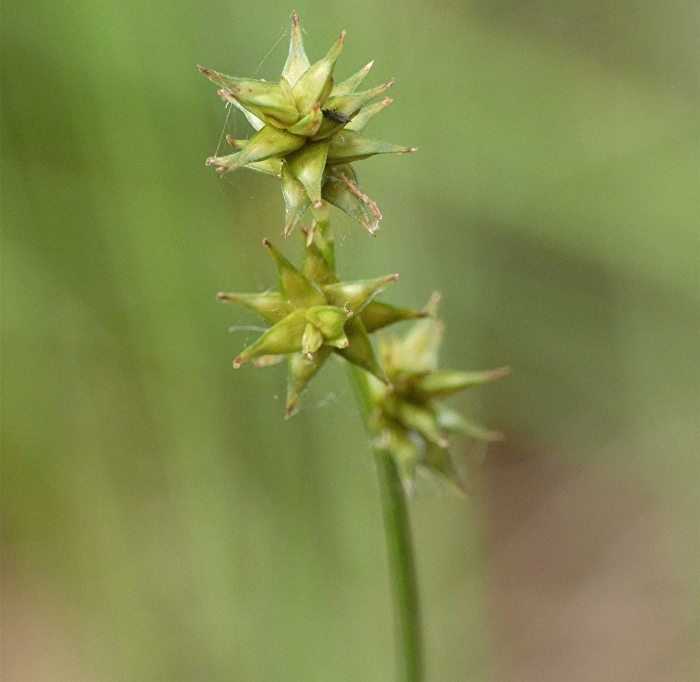
Rare Hertfordshire plants that were once thought extinct in the county have returned to a council-owned woodland on the outskirts of Rickmansworth.
An eagle-eyed local naturalist spotted Star Sedge Carex Echinata at the 38-hectare Bishops Wood Country Park – a plant that has not been seen at the ancient semi-natural woodland in Batchworth Heath for nearly 25 years.
Star Sedge, which is named due to its star shaped seed heads, thrive in damp locations with only light shade, and are closely related to grasses. Many species are uncommon and their presence can be an indicator that a habitat is in good health and condition.
Another rare Hertfordshire species was also spotted at Bishop’s Wood by the same local naturalist. Blechnum Spicant, also known as Hard Fern or Deer Fern, is an evergreen fern that has a long, flat, leathery dark green fronts with wavy edges and was last recorded at the woodland in 1990.
Cllr Aidan Bentley, Three Rivers District Council's Lead Member for Climate Change and Sustainability, said: “What an amazing rediscovery as the Star Sedge has only appeared in three other locations in Hertfordshire but has not been found in recent years, making this recent spot even more exciting. I am also pleased to see Hard Fern return to our district as it proved to be a scarce plant with a last recording of it in Hertfordshire in 2017.
“It just goes to show that woodland management is helping Bishops Wood stay in good health and condition. Works carried out in recent years at the site to remove planted conifer trees that cast deep shade, may have helped the plant to thrive.
“In recent years, we have seen some plants and wild meadow flowers return or even make their first appearance in the district, such as the Southern Marsh Orchid, thanks to our management plans that give more opportunity for wildlife to flourish. With it looking like our plans are paying off, I can’t wait to see even more rare and elusive plants and wild meadow flowers to be discovered in our open spaces.”
| Headless Content Management with Blaze